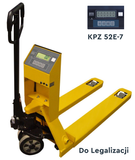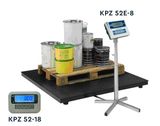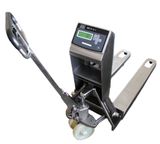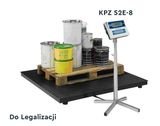

Mechanical platform scales have long been used in the warehouses of industrial and commercial enterprises.
Today, however, mechanical warehouse scales are almost entirely being replaced by electronic platform or industrial electronic models.
Warehouse scales: key features
In mechanical weighing equipment, information about the load’s mass is displayed using a pointer or dial connected to the platform’s lever system.
Mechanical warehouse scales perform well in both low and high ambient temperatures — they are shock-resistant, easy to use, and durable.
However, unlike electronic models, mechanical platform scales are sensitive to moisture and dust.
When used in high-humidity or dusty environments, they require regular maintenance.
Mechanical weighing devices should be inspected annually, just like electronic ones.
All warehouse scale models available for purchase come either from active stock or are refurbished units.
Mechanical platform devices are typically imported to order.
Although they are well-built, mechanical models cannot compete with electronic scales in terms of cost-efficiency and functionality.
Despite their reliability and ease of use, mechanical warehouse scales cannot solve one of the most critical warehouse management tasks — automation of accounting and control of weighing operations.
When weighing with mechanical devices, there will always be the so-called “human factor.”
Which warehouse scales should you choose?
Connecting electronic scales to a computer eliminates the human factor completely.
Any deviations from the norm are quickly detected and corrected using video surveillance and automated control systems.
When purchasing a warehouse scale, pay attention to the following key parameters:
-
The possibility of connecting to a computer or network
-
Maximum weighing limit (MWL)
-
Readability (division value)
-
Platform size
-
Degree of protection against dust and moisture (IP rating)
Today, when choosing a warehouse scale, the ability to connect to a PC or data network should be a top priority.
Automation of warehouse operations is increasingly in demand across industries and typically includes the following setup:
-
PC with accounting software
-
Weight indicator
-
Platform scale indicator
-
Packing scales
-
Label or receipt printer
-
Barcode scanner
Mechanical warehouse scales are rapidly being replaced by electronic weighing devices.
This shift occurs because, despite their durability and simplicity, mechanical models cannot automate data recording and control processes, leaving room for human error.
Warehouse scales available at VAGAR.PL
You can find warehouse scales in the following product categories on our website:
-
Bench scales
-
Beam scales
-
Crane scales
-
Platform scales
-
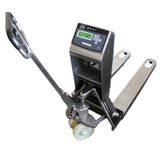
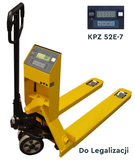
Pallet truck scales
-
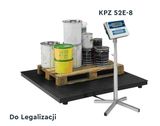
Pallet scales
What to consider before purchasing a floor scale
Start by choosing the appropriate maximum capacity.
If you plan to weigh loads up to 40–50 kg, it’s best to select a 60 kg model rather than a 150 kg one, since the margin of error increases with higher capacity.
This inaccuracy can affect warehouse accounting.
For example, if you never weigh more than 150 kg, buying a 300 kg model offers no practical advantage.
Floor scales are designed for weighing loads over 60 kg.
In warehouses, they are often referred to as warehouse scales used for inbound and outbound goods.
Common capacities include 60 kg, 150 kg, 300 kg, and 600 kg.
When choosing, it’s also important to consider:
-
The height of the indicator stand
-
The platform width and material
-
The availability of communication ports for integration with computer systems
In the VAGAR.PL online store, you’ll find a wide range of electronic warehouse scales, and our consultants are always ready to help you choose the best model for your needs.